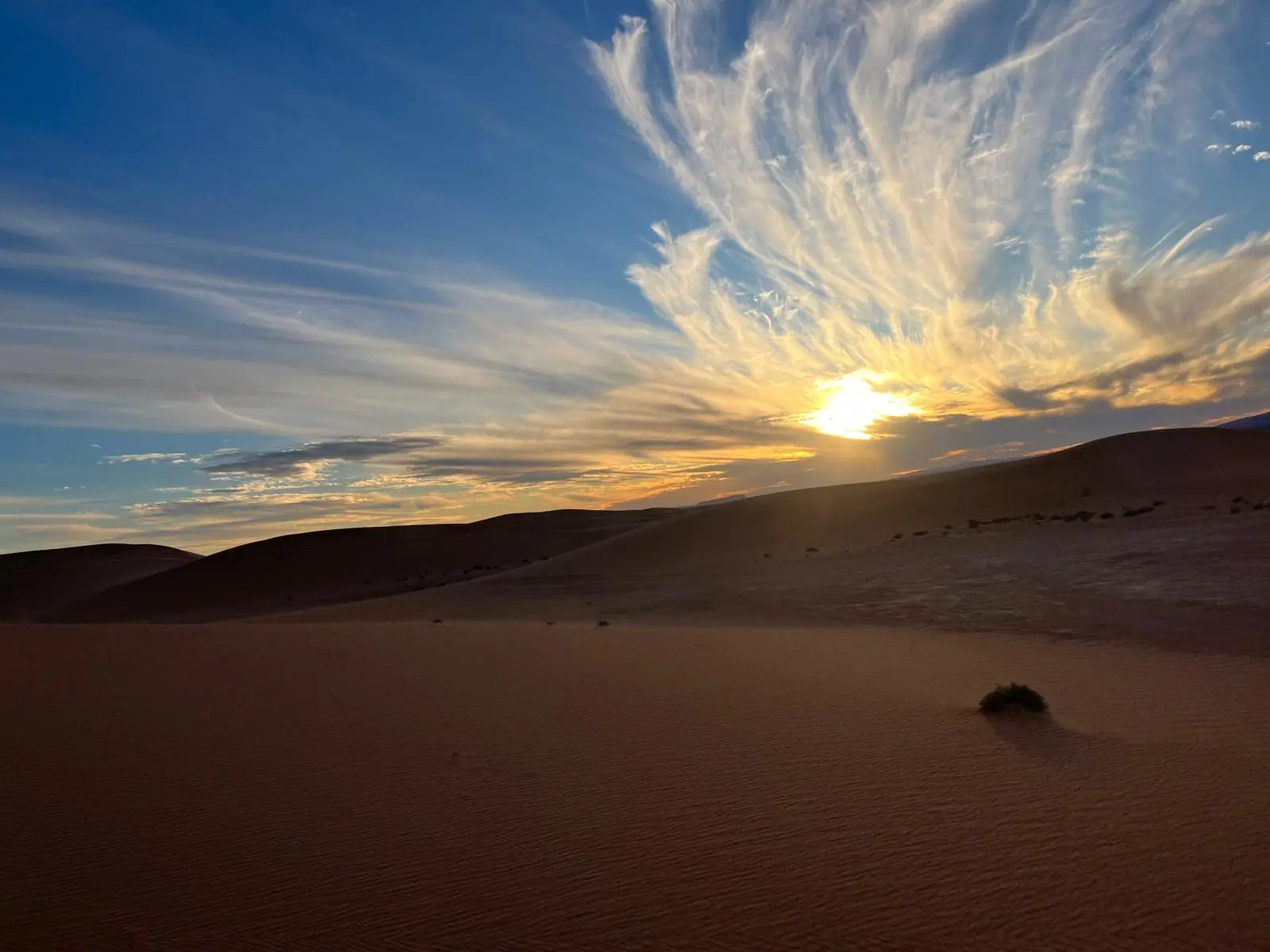
 Excursionfrom€100
Erg Chigaga in one day
Iriki park, a village lunch, a dune climb at Chigaga and the salt-white lake bed on the drive home.
Camel ride optional
Largest erg in Morocco
No Moroccan dune field is bigger than Erg Chigaga, a two-and-a-half-hour piste from Foum Zguid. The real question for an Erg Chigaga tour is how much time you give it: an afternoon, a night or several days.
In short
Erg Chigaga – Chegaga on some maps – is the country’s largest erg: some 35–40 km of dunes, around 15 km deep, lying past Lake Iriki in the far south. Foum Zguid is 2.5–3 hours away by 4×4 piste. A private day there starts at €100, an overnight at €140, and the city circuits get there too.
Looking east across the salt flat, the Chegaga dunes first appear as a low orange line. Closer up, that line becomes a range: ridge after ridge of sand, most of it 60 to 80 m high, with a few summits taller still. End to end the sand covers some 35–40 km, with a depth of about fifteen – no dune field in Morocco is larger – and its western edge meets the dry lake that forms the heart of Iriki National Park.
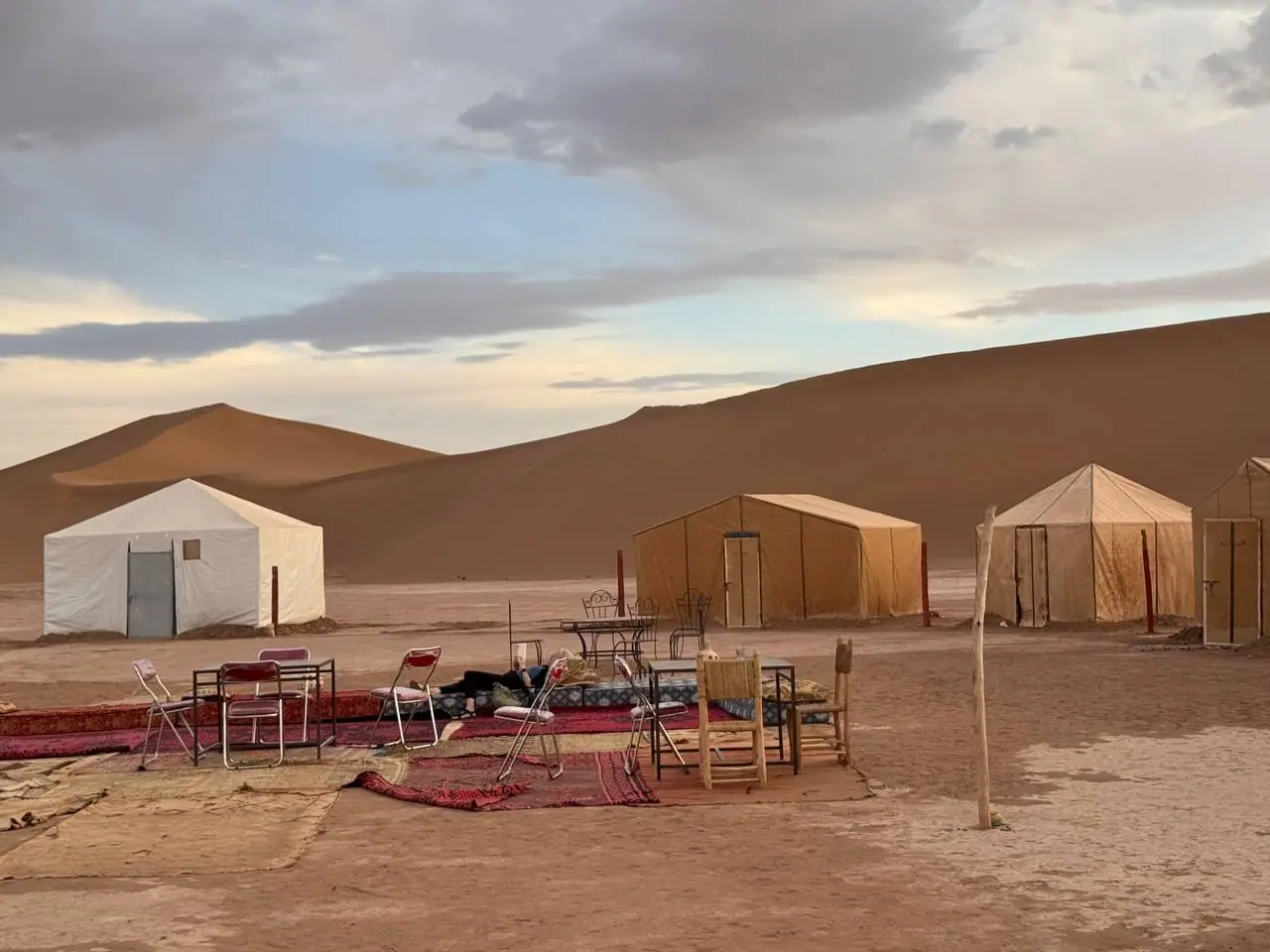
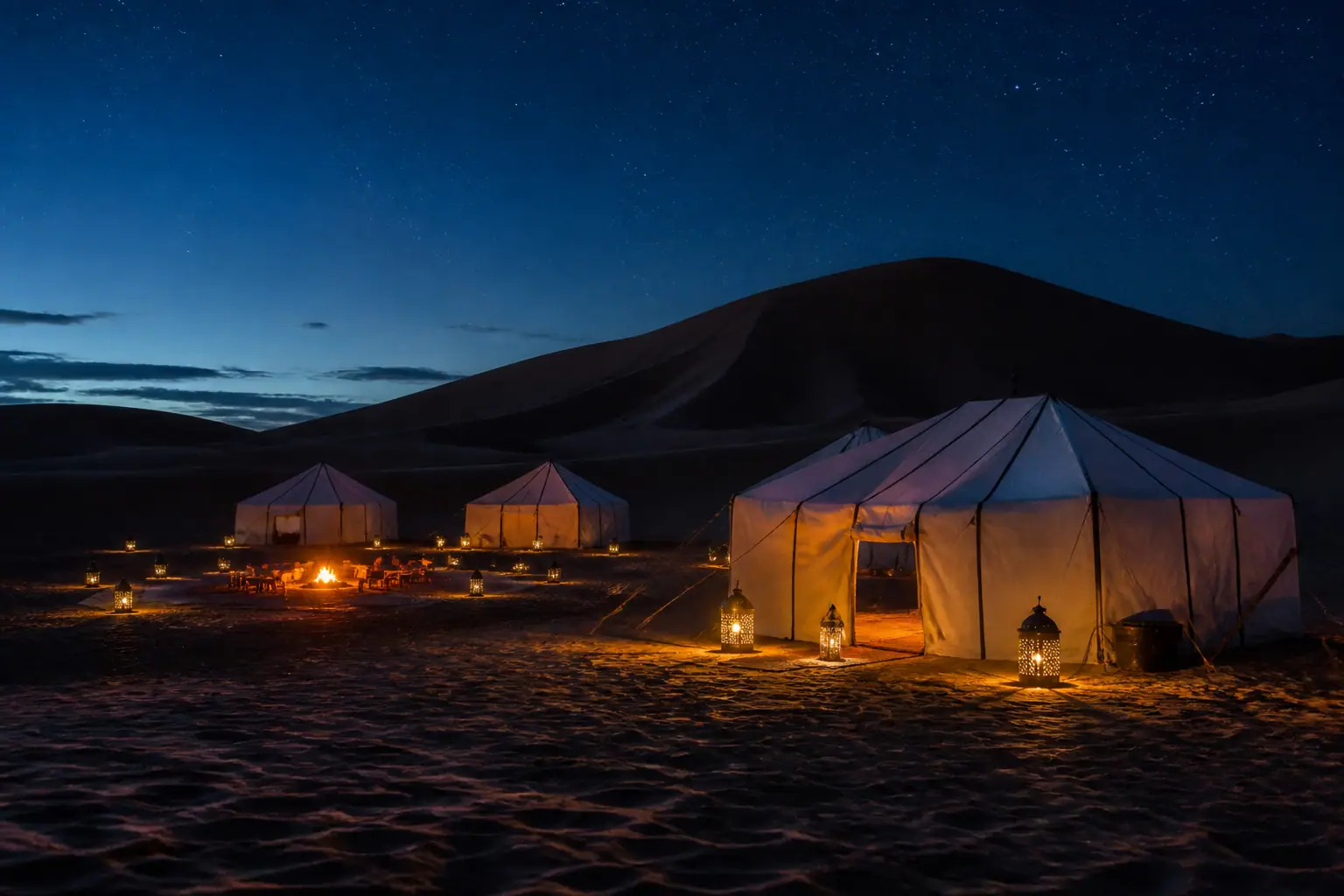
No asphalt reaches Erg Chigaga. Camps are spread out between the dunes, reached only by 4×4 or by camel, and the nearest towns are well over an hour away. That distance is the whole point: at night the silence is complete, and in the morning the only marks on the slopes are your footprints and the ripples left by the wind.
Two roads lead in. From the east, the Drâa valley runs down to M’Hamid El Ghizlane, the last town on the N9; the dunes lie some 50–60 km beyond by desert track. From the west, the piste sets off from Foum Zguid, runs through the national park and over the white crust of the lake, and meets the sand two and a half to three hours later.
The trips on this site use the western approach, from Foum Zguid, and the circuits from Zagora and Ouarzazate combine both: in by M’Hamid, out across the lake. The western route has more to see on the way – fossils, coloured rocks, a lunch stop at Zaouait Sidi Abdenabi, mirages over the plain on hot days – and it means your Erg Chigaga tour starts in a small town rather than at a busy trailhead. The Lake Iriki guide describes the crossing.
| Trip | Time at the dunes | Camel | From |
|---|---|---|---|
| Chigaga in a day | An afternoon: welcome tea, then up a dune | Optional, one hour | €100 |
| Two days with a camp night | Sunset, evening, night and sunrise | Included | €140 |
| Three days via Titanic Iriki | One night, after a nomad school visit | Included | €260 |
| Four-day desert loop | Two nights and a free day, then El Mhazil | Included | €380 |
| Four days from Marrakech | Two nights and a full day without driving | Included | €560 |
| Six-day trek from the oasis | Arrive on foot, then walk on to remote dunes | Caravan carries the luggage | €640 |
Other routes also end in the erg: the two days from Zagora (from €225), the Ouarzazate loop (from €290), three days from Agadir (from €410), three days from Marrakech (from €440) and the week on foot starting in Agadir (from €740). Prices are per person, published for two travellers.
A day in the erg has no fixed timetable, but these are the things travellers do, depending on the trip:
On a two-day trip you get one sunset and one sunrise; on the four-day trips, a whole day without the engine running. If you are choosing between nights, the guide to sleeping in the desert compares every camp option.
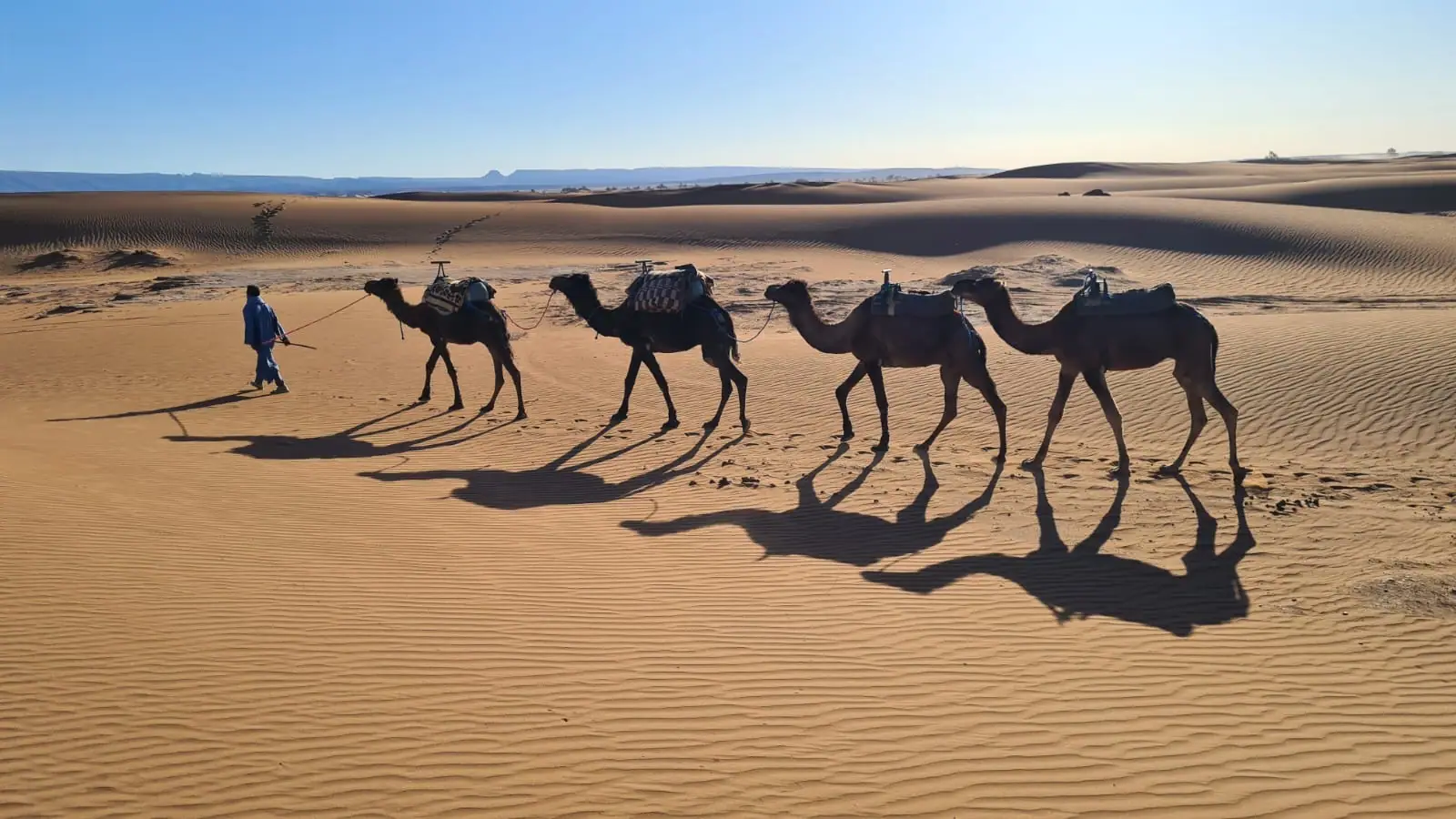
Two treks end in the erg. Camels go with you and take the luggage; you cover the ground on your own feet, though you can ask to sit on a camel for part of a stage.
Arriving this way, the big erg is the reward for a week of smaller landscapes. More walking routes are on the desert treks page.
October to April is the most comfortable period. High summer is fierce: in July and August, the city circuits from Marrakech and Agadir may swap the dune night for an oasis. Spring can bring sand-laden wind, and on winter nights the thermometer at camp sinks towards zero. Details by month are in the desert weather and packing guide.
Do not try to reach the erg without a guide. The tracks branch constantly, there is no signage, rain turns the lake surface into glue, and soft sand traps even experienced drivers. On every trip here the person at the wheel grew up with these pistes.
Excursionfrom€100Iriki park, a village lunch, a dune climb at Chigaga and the salt-white lake bed on the drive home.
Camel ride optional
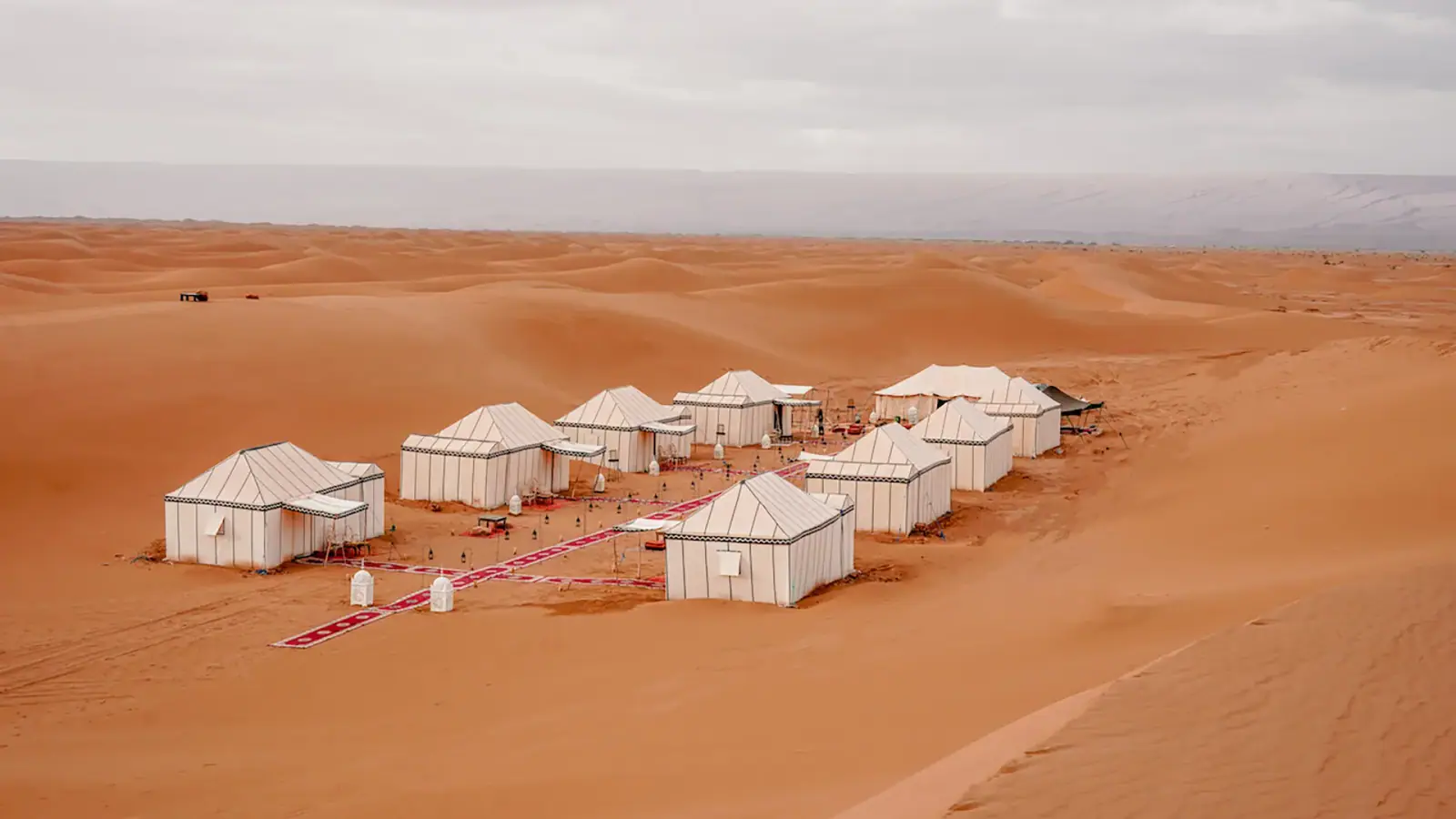 Excursionfrom€140
The flat Iriki basin, dusk from a camel’s back, a fireside supper, then nomad-style beds among the dunes.
Camel ride included
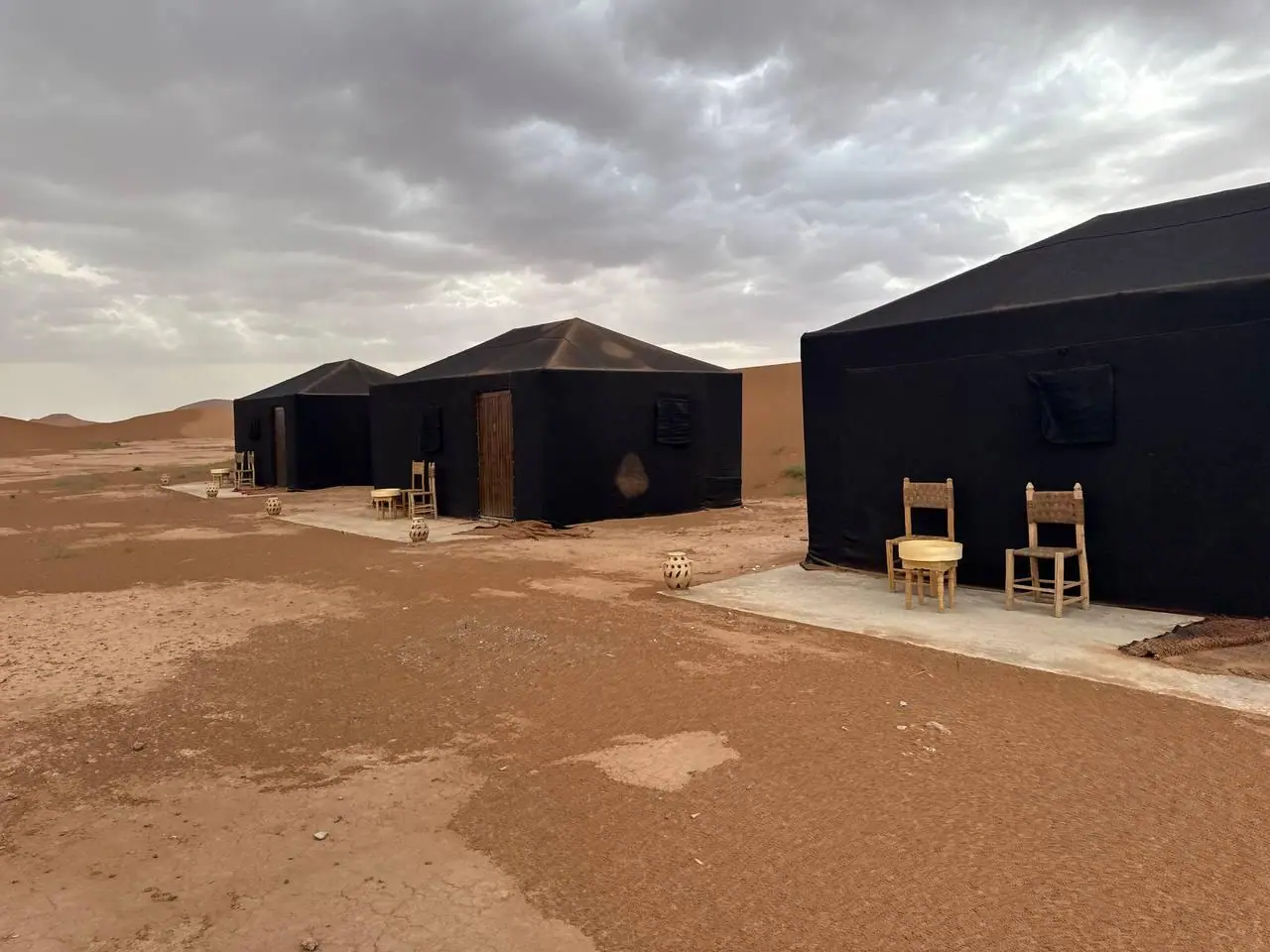 Tourfrom€260
Fossil ground, a sunset at Titanic Iriki, a nomad school, then camels and music among the dunes.
Camel ride included
 Trekfrom€640
A riad night, sand-baked bread under the palms, then three walking days into Chigaga and El Ghoule.
With camel caravan
Neither is wrong. The name comes from spoken local language and has been written down in several ways, so maps, signs and guidebooks vary between Chigaga, Chegaga and other forms. Whatever the spelling, it is one place: Morocco’s biggest erg, lying past the Iriki lake bed.
Starting in Foum Zguid, it can be done. The outing sets off in the morning, has lunch in a village, reaches the dunes in the afternoon for tea and a dune climb, and returns across Lake Iriki. It costs from €100 per person. Expect five to six hours on tracks in total, and no sunset or sunrise in the dunes.
The typical crest is 60–80 m tall, and a handful of the biggest ridges top that. Heights shift slightly over time with the wind. Climbing one of the tall dunes for sunset takes a good half hour of steady effort in soft sand, so leave camp early and take water.
You get one on the overnight camp, the three-day route by way of Titanic Iriki, the four-day loop, and the Zagora, Agadir and Marrakech circuits. The day trip offers an hour on a camel as an extra. The two treks use camels as pack animals; walkers who want a rest can request a ride for a stretch.
Leaving from Foum Zguid, the single day costs from €100 a head and an overnight from €140. City circuits run from €225 (two days out of Zagora) up to €560 (four days out of Marrakech). Walking there costs from €640 or €740, depending on the trek. Each figure is per person, based on two travellers.
Yes. The erg has no paved access, and both approaches – from Foum Zguid or from M’Hamid – mix sand, stone and dry lake bed. Within the park, the rules make four-wheel drive compulsory. Every tour here includes a private vehicle with a driver from the area, so there is nothing to hire yourself.
Booking
Send your dates, the number of travellers and the trip you like. Abdul replies with the programme and the price; nothing is booked until you agree.
WhatsApp+212 649 598 615