 Tourfrom€380
Grand desert tour, 4 days
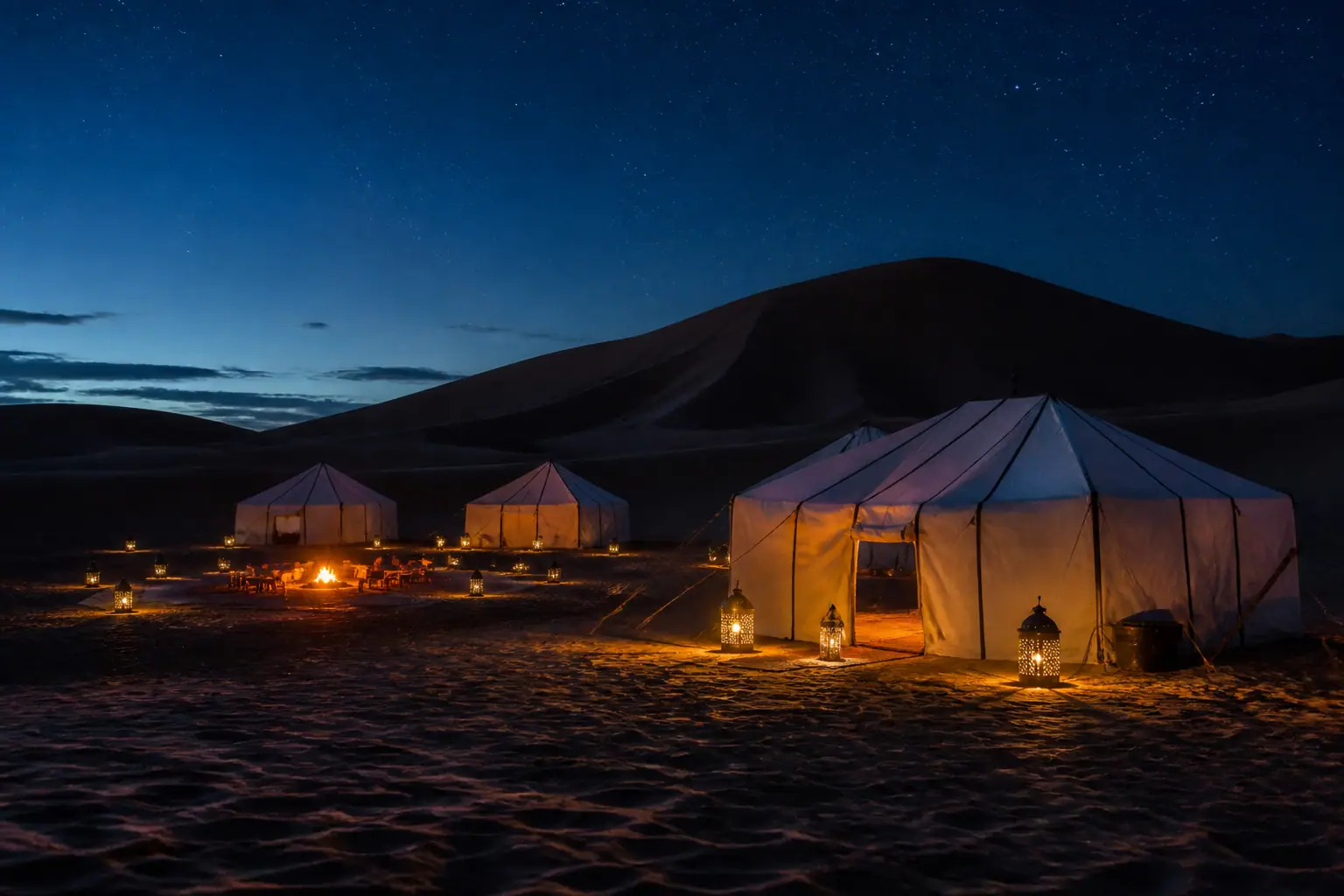
A day off in the Chigaga sand, the near-empty El Mhazil dunes and engraved rocks below the Jebel Bani.
Camel ride included
Weather · Packing
The best time to visit the Morocco desert runs from October to April, with warm, not scorching, afternoons. Here is the weather month by month, what changes in summer and winter, and what to pack.
In short
For the desert south of Foum Zguid, October to April is the main season: warm days, cool or cold nights. Summer afternoons regularly pass 40 °C, and in July and August some circuits may move the dune night to an oasis. Winter nights can approach freezing. Pack sun protection, a warm layer and closed shoes whatever the month.
Out here, between the Jebel Bani and the Chigaga sand, the year has a simple rhythm. From October to April, the sun is strong but bearable, walking is pleasant for hours at a stretch, and evenings by the fire call for a jacket. From May the heat builds, and by July it dominates the day.
So the best time to visit the Morocco desert depends on what you plan to do:
We have not found published averages for the dunes themselves, so the table rounds the figures published for Zagora, a town of the same hot desert climate on the eastern side of the erg. Expect nights in the open desert to be a little colder than these figures, and the middle of the day on the sand to feel hotter.
| Month | Average high | Average low | What it means for a desert trip |
|---|---|---|---|
| January | 20 °C | 4 °C | Clear, bright days; the coldest nights at camp |
| February | 22 °C | 6 °C | Still cold after dark; very good walking weather |
| March | 26 °C | 10 °C | Warm days, mild evenings; wind becomes more likely |
| April | 31 °C | 13 °C | Hot middays; last comfortable month for long treks |
| May | 36 °C | 17 °C | Hot; desert nights pleasant, plan activities early and late |
| June | 41 °C | 21 °C | Very hot; short trips only, with long midday breaks |
| July | 45 °C | 25 °C | Peak heat; on some circuits the dune night may move to an oasis |
| August | 44 °C | 25 °C | Peak heat; same arrangements as July |
| September | 37 °C | 20 °C | Heat easing; storms are possible |
| October | 31 °C | 15 °C | Season opens; the wettest month or two of a dry year |
| November | 25 °C | 11 °C | Mild days, cool nights; excellent for every trip |
| December | 20 °C | 6 °C | Short days, cold nights; winter clothing needed |
Rain is rare – Zagora averages around 60 mm in a whole year – and the wettest months are October and November; when it does fall, it often comes as short storms. The September 2024 storms showed what that can mean: Lake Iriki filled with water for the first time in decades.
From June to August, daytime temperatures often go beyond 40 °C, and the sand itself gets hotter still. The programmes adapt rather than stop:
If summer is your only window, a short outing or one camp night out of Foum Zguid is the most realistic choice.
December to February brings bright, dry days and the coldest nights. Days are often around 20 °C, pleasant for walking and photography, but after sunset the temperature falls fast, and at camp it can come close to freezing.
Long winter evenings leave plenty of time under the stars; see how the camp nights work.
Spring – roughly March to May – can bring sandstorms. They are not daily events, but when the wind lifts the sand, visibility drops and the guide may change the order of the day or wait for it to settle. Sunglasses and a scarf to cover your face are worth packing from February onwards.
Autumn storms are less frequent but more consequential: rain turns the lake bed and tracks into mud for a while. Your departure is always confirmed against current track conditions, and on the morning itself the guide chooses a safe line. For more on the lake after rain, read the Lake Iriki page.
Adapt the list to your trip. The essentials stay the same in every season: protection from the sun by day and from the cold at night.
Ready to choose a trip? Compare them on the price overview or read about the Sahara landscapes around Foum Zguid.
Tourfrom€380A day off in the Chigaga sand, the near-empty El Mhazil dunes and engraved rocks below the Jebel Bani.
Camel ride included
 Excursionfrom€140
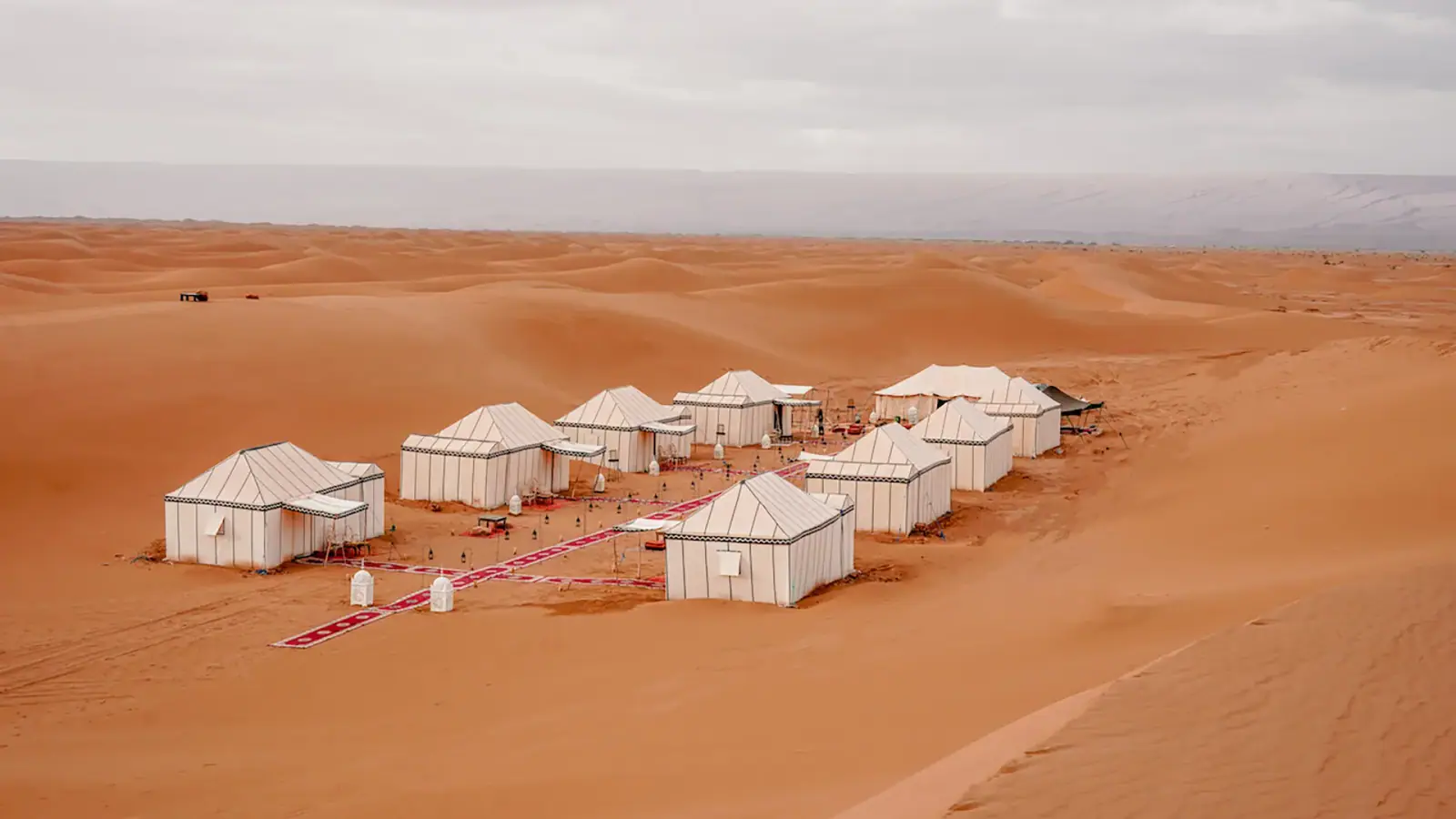
The flat Iriki basin, dusk from a camel’s back, a fireside supper, then nomad-style beds among the dunes.
Camel ride included
Trekfrom€300Easy walking days, camps in the sand, tea with nomad families at their oasis, then a village house made of earth.
With camel caravan
October, November, March and April are the most balanced months: warm days, nights cool but not freezing, and good conditions for walking. December to February is also excellent if you pack for cold nights. Avoid July and August unless a short, early-starting outing is all you need.
In June, July and August, daytime temperatures often rise above 40 °C; Zagora’s published averages reach about 45 °C in July. Nights stay warm. Walking treks belong to the cooler months, and on some circuits the dune night may give way to an oasis stay at the height of summer.
Between December and February the camp can approach 0 °C overnight, although the afternoon may have reached around 20 °C in sunshine. The temperature falls the moment the sun goes. Pack a warm coat, a hat and layers to sleep in, and ask whether a sleeping bag is provided on your trip.
Spring can bring sandstorms, but they come and go; most spring days are clear. If the wind rises, the guide adapts the programme, for example by waiting before a dune climb. Pack sunglasses and a scarf. Outside spring, wind is generally less of a concern.
Loose, light clothing that covers your shoulders and legs protects you from the sun and is respectful when meeting families in villages. Add a hat, sunglasses and closed shoes. For evenings, a fleece or a down jacket; between December and February, gloves and a woolly hat too. Sandals alone are not enough for stony ground.
Rarely, but it can. Zagora averages only about 60 mm a year, mostly in short storms in autumn. After heavy rain the tracks and Lake Iriki can be muddy for a while, so your departure is confirmed against current conditions, and the guide picks the safest route on the day.
Booking
Send your dates, the number of travellers and the trip you like. Abdul replies with the programme and the price; nothing is booked until you agree.
WhatsApp+212 649 598 615